

Warming Up in Sub-Zero Temperatures – How to Prepare Your Muscles and Avoid Injuries
After covering layered clothing, footwear choices, and safety in low-visibility conditions in the first part of our November series, it is time for an equally important yet often neglected aspect of winter training: properly preparing your body for exertion in low temperatures. When the mercury drops near or below freezing, running along the trails of Dudova Šuma or the shores of Lake Palić requires a completely different approach than in spring and summer.

Why is winter challenging for your muscles? In cold weather, the body naturally constricts peripheral blood vessels to conserve heat for vital organs. As a result, blood flow to muscles, tendons, and ligaments decreases, making them stiffer and less elastic. Stepping straight out of a warm room into a fast pace is an almost guaranteed recipe for a hamstring strain, Achilles tendonitis, or uncomfortable knee pain.
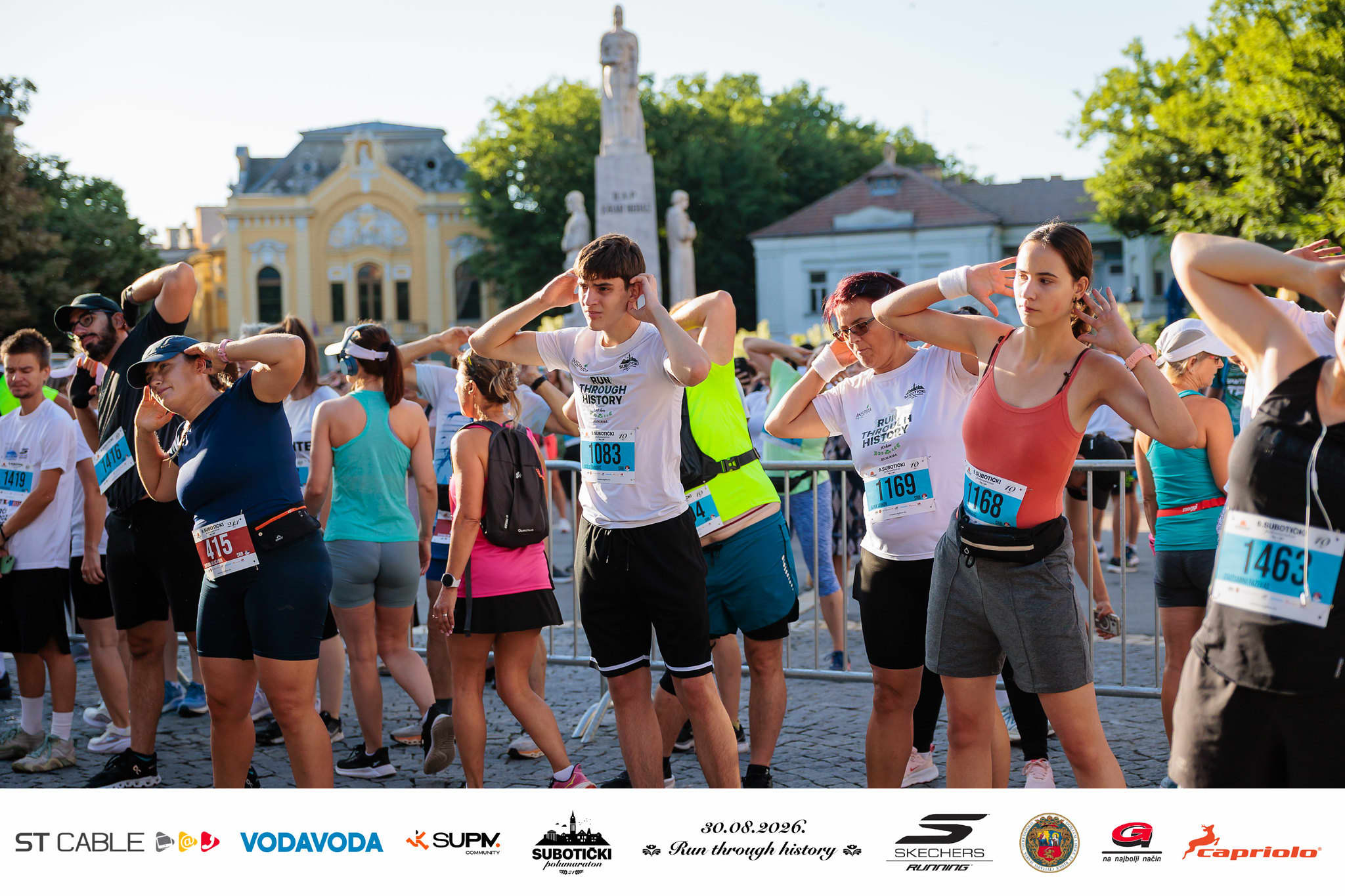
Therefore, warming up starts indoors. The biggest mistake recreational runners make in winter is standing out in the cold wind trying to stretch before a run. Instead, spend the first five to ten minutes warming up indoors before you even step outside. To prepare your joints and increase mobility, perform about ten circular rotations with your arms, hips, knees, and ankles to lubricate the joint capsules. To get your heart rate up, light high-knees in place, forward lunges, or a few sets of jumping jacks will raise your body temperature and boost circulation without causing heavy sweating. You are then ready to start—gradually. Once you hit the trail, run significantly slower than your usual pace for the first 5 to 8 minutes, giving your lungs and muscles time to adapt to the cold air.
Finishing a winter workout carries its own specific risks. The moment you stop running, your body stops generating large amounts of heat, while damp clothing rapidly begins to cool your skin. Because of this, static stretching outdoors while a cold north wind is blowing should be kept to a minimum or skipped altogether. Instead of standing around in the cold, finish your workout with a light three-to-five-minute walk back to your front door or car. As soon as you get indoors where it is warm, change out of your wet shirt, and only then do a thorough static stretch of your calves, quadriceps, hamstrings, and hips. A warm bath or shower afterward will further relax muscle fibers and speed up recovery.

In the third part of our series, we will look at adapting your training plan during the winter months—how to maintain fitness, build an aerobic base, and smartly manage your workload without chasing personal records.